
MiNT SLR670-S manual control overview
The MiNT SLR670-S gives you real, hands-on control over instant photos. You’ll feel the camera come to life as you adjust settings to suit how you shoot, not how the camera wants to shoot. It’s about making Polaroid-style photos look exactly how you picture them, with you in the driver’s seat. With manual control, you choose shutter speed, aperture, and flash behavior so every shot matches your mood and scene.
Manual mode means dialing in the exposure you want and seeing the results as you shoot. It’s a tactile experience: you hear the click, adjust, shoot, and decide when the light is right. This approach preserves the charm of vintage photos while keeping you in control of the result. If you’re chasing a classic look—lighter or weathered tones, strong shadows, or bright highlights—the SLR670-S puts you in command and helps you create scenes that feel intentional.
What manual control means
Manual control means you set exposure yourself instead of leaving it to the camera. You choose shutter speed to freeze or blur motion, aperture to shape depth of field and brightness, and flash power or off-camera usage to balance light. Feedback is immediate, so you get a moment that reflects your timing and tone, not automatic defaults. For a bold, punchy look, you can slow the shutter and push contrast; for soft, dreamy tones, open the aperture a touch and soften the light.
Manual control also helps you maintain a consistent look across a series of shots by letting you reuse a chosen setting for recurring lighting conditions. That consistency is gold when building a vintage portfolio or recreating a pin-up or street photography vibe.
Who benefits from it
If you value film-like results with predictability, manual control is for you. Beginners gain a clear path to understanding light, how the camera interprets it, and how your choices affect the final print. Experienced shooters appreciate precision and repeatability—no more reliance on unpredictable auto settings.
In changing light—early mornings, late afternoons, or rooms with mixed lamp lighting—the advantage is clear. You can preserve skin tones, create dramatic silhouettes, or maintain a consistent vintage look across a shoot.
Quick facts about the SLR670-S
- The SLR670-S delivers tactile, precise control over exposure.
- You can adjust shutter speed, aperture, and flash behavior on the fly.
- It supports classic Polaroid-style results with a modern manual system.
- The camera encourages experimentation and helps you discover your signature look.
- It’s designed to feel natural in your hands, making every shot enjoyable.
MiNT SLR670-S features explained
The MiNT SLR670-S blends a vintage camera idea with modern practicality. You get an SLR body with the heart of a Polaroid-style instant system. It feels sturdy, with a design that invites tinkering just enough to feel in control without being overwhelming. The weight and balance give confidence for street or park shoots. The core idea: manual input yields better, more deliberate shots while still producing a quick print.
What makes the SLR670-S special is its blend of old-school charm with practical tweaks. The body accepts classic instant film packs, so retro borders return to your prints. Ergonomics are friendly for long sessions, with a natural grip and a viewfinder that aligns with framing. It’s a faithful nod to the tactile joy of instant photography, refined to keep your workflow smooth.
If you’re used to point-and-shoots, this camera invites you to slow down a bit. The larger exposure knob and expanded shutter options encourage experimentation. The result is a batch of photos that feel intentional, not rushed. In short, the MiNT SLR670-S gives you the vibe of vintage instant photography with hands-on adjustments you can actually use.
Key hardware highlights
The SLR670-S rests on a solid build that honors the classic form while delivering modern practicality. You’ll find a robust lens mount and straightforward film-pack access. The optics stay sharp, and the film adds characteristic grain and color shifts you love. Dials and levers deliver a tangible feel, perfect for more than auto exposure.
Inside, you’ll feel the difference in exposure controls. Manual exposure lets you push or pull light to shape mood, much like analog photography. The viewfinder lines up with real-world frame edges for predictable prints. The film door protects against light leaks, helping keep shots clean and prints consistent. Balanced weight distribution helps you hold steady, encouraging careful setup and deliberate framing.
User interface at a glance
Operating this model feels like a guided throwback. Simple knobs and levers set shutter speed and aperture, making each shot purposeful. Feedback is immediate: you see results soon after, creating a quick learning loop. The UI is uncluttered, so you spend less time hunting for settings and more time composing. Key controls are in easy reach, with clear film-status indicators and straightforward film loading.
Feature checklist for buyers
- Robust build that echoes vintage design while supporting modern film packs.
- True manual exposure control to dial in mood and lighting.
- Clear, usable viewfinder with precise frame lines.
- Easy film loading and a light-tight film door.
- Balanced weight and grip for longer shoots.
- Quick feedback from setting changes to printed results.
- Compatibility with Polaroid-style film formats.
- Durable, tactile controls that invite experimentation.
SLR670-S compatibility with vintage bodies
The SLR670-S is a popular choice for instant photos that feel timeless. Its design aims to pair with classic Polaroid systems, preserving retro vibes while delivering modern control. Pairing it with vintage bodies yields a tactile shooting experience: slower, deliberate framing and a camera that feels built to last. The weight and balance suit older lenses and grips, making composition intuitive rather than fiddly.
Think of the SLR670-S as a bridge between eras. The mechanical feel of a vintage body meets the convenience of modern instant film. You’ll plan light, focus, and composition rather than chasing minor exposure tweaks on the fly. If you want a look that nods to Polaroid’s heyday with a touch more control, the SLR670-S is a strong ally.
Your results depend on how you handle light and lens quirks. With vintage bodies, you’ll often pre-visualize scenes and accept some soft edges or vignetting as part of the charm. The SLR670-S helps you keep that charm while delivering more predictable exposure in mixed lighting. Expect a learning curve, but plenty of aha moments when you nail a shot that feels both retro and fresh.
Which Polaroid bodies pair well
Choose bodies that feel sturdy and familiar, with clean viewfinders and straightforward controls. A Polaroid body with reliable shutter and good balance pairs well with the SLR670-S, letting you shoot quickly when the moment is right. Size and weight matter: heavier bodies reward the SLR670-S’s steady feel, while lighter models benefit from a compact grip with solid balance. You’ll quickly recognize which bodies deliver the look you want—sharp where it matters, with character in the shadows.
Lens and mount notes for vintage gear
Lens choice matters as much as the body. Vintage fixed-lens glass can deliver punchy, classic looks, especially with the SLR670-S. Some lenses render colors differently and add falloff that looks cinematic with vintage film. Test a few focal lengths to match your subject—50mm is often ideal for portraits; wider lenses excel for street scenes.
Mount compatibility is key. Ensure the lens fits the mount used by both your vintage body and the SLR670-S. Adapters exist, but they add steps to your setup. If you switch bodies often, aim for an ergonomic, secure mount. Choose glass you enjoy looking through; the SLR670-S delivers the control you want when the lens helps tell your story.
Compatibility checklist
- Confirm the vintage body’s mount matches your lenses or has a reliable adapter.
- Check shutter behavior and light metering on the body to avoid surprises.
- Test several focal lengths to see how the SLR670-S handles depth of field and contrast.
- Verify film plane alignment with your chosen film format.
How to use MiNT SLR670-S
The MiNT SLR670-S changes how you approach instant photography. You gain more control, more feel, and a camera that respects your vintage vibe while offering modern reliability. The balance between classic design and practical usability becomes evident as you fine-tune exposure and focus. This guide walks you through simple steps for true hands-on gratification from each shot.
This camera invites you to slow down: select film, set exposure, and decide how your polaroids should look in the end. The SLR670-S rewards forethought—like using an old film camera but with instant feedback. The result is photos that feel alive, with punchy colors and soft focus that define instant film.
Basic setup steps
Mount the right lens and ensure the viewfinder is clear. Confirm fresh batteries and correct wiring for reliable metering. Dial in base settings like ISO and exposure compensation so each scene shines. The SLR670-S provides tactile control, so expect to adjust several times before your first frame. Yes, there may be a little trial and error, and that’s part of the charm.
Load the correct film type for your model and secure the film door. The design makes loading straightforward, with a satisfying close and a ready-to-shoot feel. Once loaded, focus on the moment rather than the mechanism.
Loading and preparing film
Handle film with care. Align with guide rails and slide into place until you hear a reassuring snap. Hold steady and brace for the view through the lens. Let the scene be guided by light, with the metering helping you decide when to pull the trigger. After each shot, watch the frame begin to print for a tangible reminder of your moment.
Keep the developing area free of dust and fingerprints. Handle exposed sheets by the edges and avoid touching the emulsion. In bright sun, adjust exposure or position your subject for flattering light. As the image develops, listen for the film’s quiet chemistry at work. This ritual makes every photo feel earned.
Beyond Polaroid: How the MiNT SLR670-S Brings Manual Control to Vintage Bodies
Beyond Polaroid: How the MiNT SLR670-S Brings Manual Control to Vintage Bodies showcases a practical convergence of control and charm. This approach gives you precise, tactile adjustments that feel natural on older bodies, marrying classic looks with modern reliability. You’ll appreciate the clarity it adds to your process and the confidence you gain behind the lens.
The SLR670-S lets you tailor exposure, color balance, and depth of field by swapping lenses or adjusting timing. Manual conversion expands your lens options, enabling experimentation with focal lengths while preserving the Polaroid feel. The result is greater creative freedom, a wider range of textures, and consistent results across shoots.
In short, this manual approach embraces the ritual of vintage photography while delivering reliable, repeatable results. It’s the kind of setup that invites you to slow down, think ahead, and craft images with intention—exactly the spirit of a true Beyond Polaroid workflow.
Parts and service basics
Know the essential parts to keep your setup solid: back plate, film gate, and light seals influence edge quality and exposure accuracy. Seals that dry out can cause halos or light leaks, so replace them when needed. Regular checks—shutter action, frame alignment, and focus movement—prevent big headaches. Maintain a simple routine: clean the film path, test with a disposable frame, and reseat adapters securely. Keep a small toolkit handy for on-set adjustments.
Safety and maintenance
Always power down before working on any back or connector. Work in a clean area to avoid dust. Handle lenses and back plates gently. Test gradually, making small adjustments and evaluating results to minimize risk and learn each tweak’s effect on exposure, color, and sharpness.
Polaroid manual exposure control and instant film manual settings
Manual exposure control lets you decide how bright or dark your shot will be, balancing light to prevent washout while preserving color fidelity. Different instant films behave differently, so adjust shutter speed and aperture to predict results before you press the shutter. Overexposure can yield a dreamy glow; underexposure can deepen shadows. With practice, you’ll anticipate how your film reacts in various lighting and shape your look, frame by frame.
Balancing shutter and aperture
Manual exposure involves coordinating shutter speed and aperture. A brighter scene may require a wider aperture or longer shutter; a darker scene the opposite. In outdoor portraits, a mid-range shutter with a moderate aperture keeps skin tones natural and avoids harsh highlights. In dim interiors, a longer shutter with a wider aperture improves detail, while watching for motion blur. Knowing your film’s limits helps you choose the best combination.
Adjusting for 600 and peel-apart film
600 film tends to push mid-tones toward a clean look with warm skin tones; you may need less exposure than digital expectations. If images look washed out, dial in a touch more exposure or a slightly wider aperture. Peel-apart film adds complexity since you separate the image from the backing after printing. Exposure influences peeling smoothness and color transfer, so practice timing and lighting for clean results. Start with well-lit scenes and refine peel timing to minimize wasted frames. Learn how much light your film needs to develop cleanly.
Simple exposure rules
- In bright sun, use a smaller aperture and faster shutter to preserve highlights.
- In shade or indoors, open the aperture and consider a longer shutter to add depth.
- Start with a baseline: mid-range aperture (around f/8) and moderate shutter speed, then adjust.
- For peel-apart, add a bit more light to ensure clean separation and color transfer.
MiNT SLR670-S review insights
The SLR670-S blends vintage form with modern control, delivering Polaroid-style results with true manual handling. The heft and classic feel invite you to shoot more deliberately. It’s not a gimmick; it’s a reliable tool for consistent results when you want that authentic tactile Polaroid vibe. In practice, it feels like a real SLR with a removable back for 600/635 film backs. The bright viewfinder and manual focus make composition feel intentional, not rushed. Outdoors, you can dial in exposure confidently for any lighting, while the build remains sturdy enough for bag travel. Portraits gain nostalgic warmth; landscapes benefit from longer exposures for texture and mood. The trade-off is a slower workflow, but that pace is part of the charm.
Quick review summary
Authentic, hands-on control with a vintage vibe that’s hard to beat for Polaroid-style photos. The MiNT SLR670-S rewards patience with rich results and a meaningful learning curve.
Best instant cameras for manual control compared
You want control over exposure, focus, and your own look. The SLR670-S stands out for true manual control on a vintage body, but there are solid alternatives worth weighing for a more approachable setup.
How the SLR670-S stacks up
The SLR670-S offers genuine manual exposure control, lens swapping, and classic instant prints. It’s not the simplest to learn, but it rewards careful hands-on work with a tangible, signature result. It accepts Polaroid-compatible film backs, yielding rich shadows and texture when you dial in the light. The main trade-off is size and weight; it’s not pocket-friendly, but it delivers authentic manual control with vintage vibes.
Top alternatives to consider
If you want simpler operation with still-usable control, there are strong options that balance accessibility with exposure handling. Look for cameras that maintain the nostalgic look while offering adjustable settings in a friendlier package. These models tend to suit quick street shoots or travel while preserving that unique instant print style.
Buying comparison guide
- Seek true manual exposure control and a robust lens system for creative freedom.
- Check film availability and compatibility to manage cost and print quality.
- Consider size and weight for on-the-go shooting.
- Prioritize build quality and ergonomics for real-world use.
- Think about future-proofing if you want to explore beyond Polaroid: How the MiNT SLR670-S Brings Manual Control to Vintage Bodies.
Shooting tips for vintage Polaroid manual control
When shooting with manual control, you guide light rather than chase it. Set exposure, frame, and shoot. Choose film and fix your camera’s ISO, as many old bodies don’t meter for you. Use a small aperture for sharp details or open up for a soft, dreamy look that makes colors pop in the instant print. Shoot with natural daylight or shaded areas to protect highlights. Keep expectations modest and let the era charm come through in each frame.
Be practical and repeatable. Focus by estimating distance or using basic hyperfocal ideas since many vintage bodies lack autofocus. Stabilize your hands and frame with intention. A bold composition—close-ups, candid angles, or off-center subjects—can make the print feel alive. Keep edges clean and let the subject breathe within the white border.
Artful color comes from handling film and timing. Shoot with a little extra light to avoid underexposure, then rely on the print’s warmth to carry the scene. Outdoors, shade helps control highlights, while your timing maintains crisp subjects and softly textured backgrounds. Embrace imperfect edges, grain, and vintage glow as part of the look.
Focusing and composition tips
Treat focus as a conversation with your lens. Start rough, then fine-tune by eye to make eyes sharp and the background gently recede. For landscapes, anchor depth with a clear foreground element. Use the rule of thirds as a starting point, but feel free to break it for stronger images. Contrasts—bold subject colors against muted textures—pop on instant film. Keep horizons straight and edges free of distractions for a deliberate final print.
Care and maintenance for vintage bodies
Treat your vintage Polaroid with respect and regular upkeep. Clean the lens and viewfinder with a microfiber cloth, avoiding harsh solvents. Check film cartridge seals for leaks or dryness, replacing them as needed. Store in a cool, dry place away from direct sun to prevent warping or color fading. Keep a small toolkit ready for on-set maintenance: screwdrivers, a lens brush, and fresh light seals.
On-set reminders
- Lock in exposure mentally before shooting; you don’t get a second take.
- Check film orientation and seating to avoid misfires.
- Maintain a steady grip and brace against a solid surface to minimize shake.
- Embrace character over perfection—let vintage quirks show in your prints.
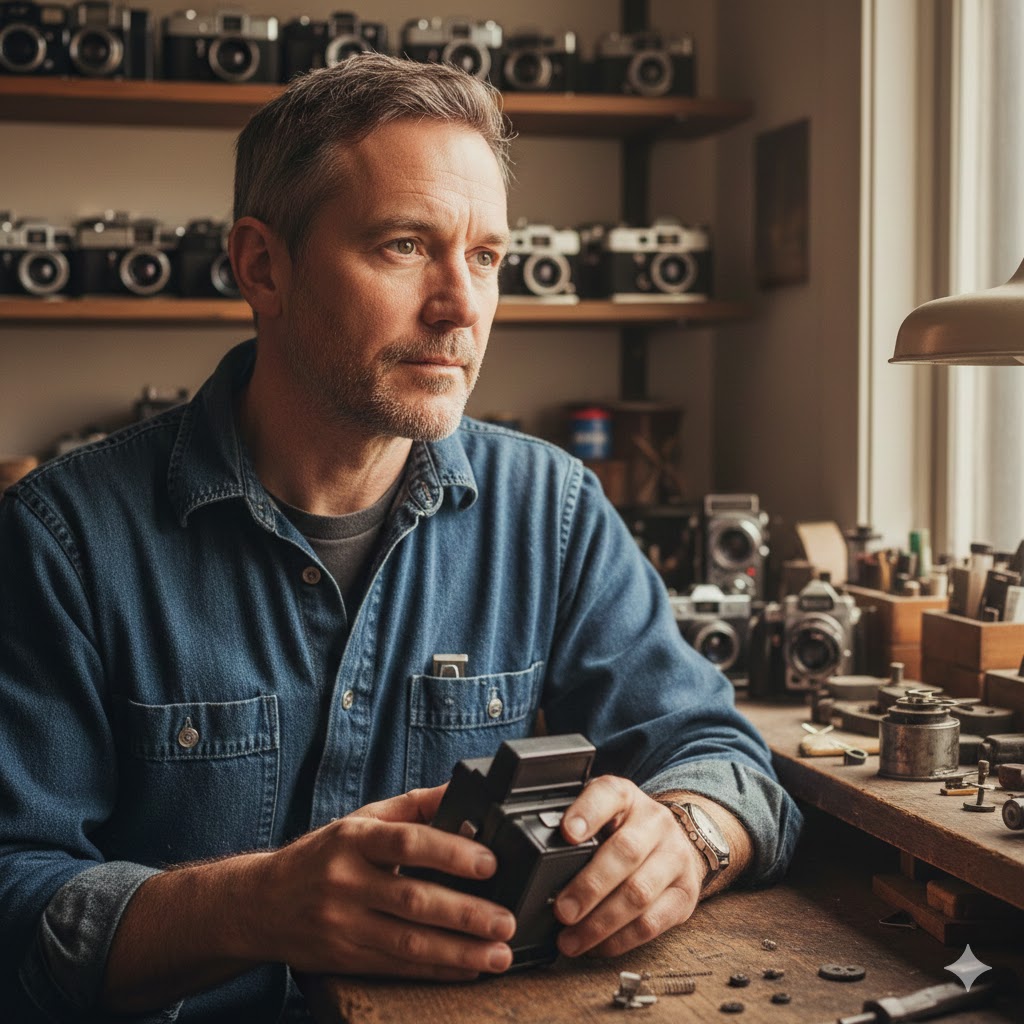
Julian is a dedicated camera restorer and analog historian with over 15 years of experience breathing new life into vintage Polaroids. From the complex mechanics of the SX-70 to the chemistry of modern I-Type film, Julian’s mission is to ensure that the heritage of instant photography is never lost to the digital age. When he’s not deconstructing a 600-series shutter, you can find him scouring flea markets for rare glass lenses.